Why Your Fascia, Not Your Muscles, Is Keeping You Stiff in Singapore
Most Singaporeans who feel chronically tight after a long workday assume the problem is their muscles. They stretch, they foam roll, they book a massage, and yet the stiffness returns by Tuesday morning. If this sounds familiar, the real culprit is almost certainly your fascia, and no amount of stretching alone is going to fix it. Finding a good yoga studio near me is one of the most practical steps you can take, because the right yoga modalities are among the very few things that actually address fascial tissue at a structural level.
Understanding why fascia matters, and why the typical Singaporean lifestyle is particularly brutal on it, is the first step toward genuinely solving the problem rather than temporarily managing it.
What Fascia Actually Is and Why It Gets Ignored
Fascia is a three-dimensional web of connective tissue that surrounds, separates, and connects every single structure in your body. It wraps around your muscles, your organs, your nerves, your blood vessels, and your bones. It is not a passive wrapping material. Fascia is metabolically active, densely innervated with sensory nerves, and capable of contracting independently of muscle tissue.
When it is healthy and well-hydrated, fascia is supple, slideable, and allows your body to move with fluid efficiency. When it becomes dehydrated, compressed, or subject to repetitive low-load stress over long periods, it begins to thicken, mat together, and lose its glide. The technical term for this is fascial densification, and it is the reason you feel stiff even when your muscles test as having normal flexibility.
The reason fascia gets ignored in most fitness and physiotherapy conversations is partly historical. Medical education traditionally treated fascia as packaging to be cut through to reach the “real” structures underneath. It was only in the last two decades that fascia researchers like Dr. Robert Schleip and the team behind the Fascial Research Congress began publishing work that repositioned fascia as a sensory organ in its own right, one that plays a central role in proprioception, pain perception, and movement quality.
Why Singapore’s Work Culture Is Particularly Hard on Fascia
The average Singaporean office worker sits for somewhere between seven and ten hours a day. This is not unusual globally, but what makes the local context particularly damaging is the combination of factors that stack on top of that sedentary baseline.
Air-conditioned office environments keep the body at a sustained cool temperature. Fascia, which is largely made of collagen fibrils suspended in a gel-like ground substance called the extracellular matrix, becomes less pliable when it is cold. The cooling effect of long hours in air-conditioned spaces literally makes your connective tissue stiffer before you even factor in the postural loading.
Add to that the sustained forward head posture from screen use, the compressed hip flexors from seated work, and the shallow breathing patterns that most desk workers default to, and you have a recipe for fascial densification that accumulates over months and years rather than days. By the time a person feels it as chronic stiffness, the tissue has already undergone meaningful structural change.
The commute compounds this. Long MRT rides in fixed standing or seated positions, carrying heavy laptop bags on one shoulder, and the general postural collapse that happens when people are tired all add asymmetrical and sustained fascial loading to an already compromised system.
Why Stretching Alone Does Not Work on Fascia
This is the part that frustrates people the most. They stretch regularly and still feel tight. The explanation lies in the biomechanical properties of fascial tissue.
Fascia responds to load differently depending on the speed and duration of the force applied to it. When you stretch quickly or hold a stretch for only thirty to sixty seconds, you are primarily affecting the elastic muscle fibre component of the tissue complex. The fascial component, which has viscoplastic properties, requires slow, sustained loading held for considerably longer periods, typically two to five minutes at minimum, before it begins to mechanically change.
This is exactly why:
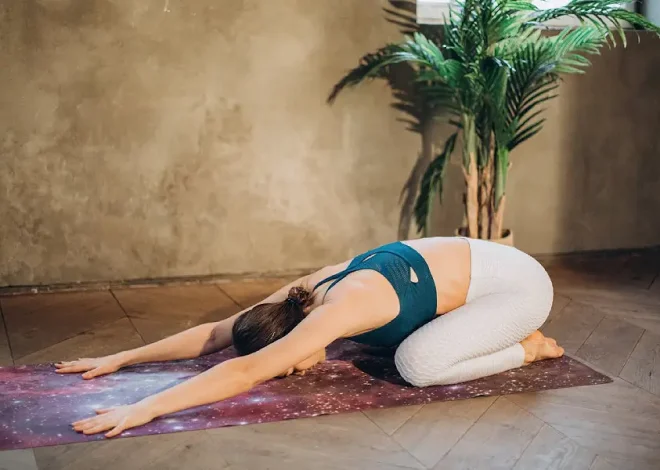
- Passive Yin Yoga postures held for three to five minutes are genuinely therapeutic for fascia in a way that dynamic stretching is not
- Wall Rope Yoga, which applies sustained traction and decompression to joints and connective tissue, reaches fascial layers that standard stretching cannot access
- Foam rolling has limited effect beyond the muscle surface layer because it does not apply sustained load at the depth required to influence deeper fascial planes
The temperature element matters here too. Warm yoga practices gently elevate tissue temperature, which reduces fascial viscosity and makes the tissue more receptive to therapeutic loading. This is not a trivial detail. It is one of the physiological reasons that a heated yoga environment produces meaningfully different tissue outcomes than room-temperature stretching.
The Role of Hydration in Fascial Health
Fascia is approximately 70% water. Its ground substance behaves somewhat like a sponge: when it is regularly loaded and deloaded through movement, it pumps fluid through the tissue and maintains hydration. When it sits in the same position for hours at a time, that pumping mechanism stops, the ground substance stiffens, and the collagen fibrils begin to mat together.
This is why people who move regularly throughout the day, even in moderate amounts, have noticeably better tissue quality than those who exercise intensely for one hour but then sit still for the remaining fourteen waking hours. The fascial system needs distributed movement throughout the day, not just a single loading event.
Practices that involve the full range of spinal movement, hip rotation, shoulder girdle mobilisation, and thoracic extension are particularly effective at rehydrating fascial tissue because they access planes of movement that daily life never uses. Most people in Singapore never extend their thoracic spine, laterally flex their lumbar region, or rotate their hips through their full available range on any given day. Yoga addresses all of these systematically.
How to Know if Fascia Is Your Primary Problem
There are some signs that point more toward fascial restriction than pure muscle tightness:
- Stiffness that is worst in the morning and improves after twenty to thirty minutes of movement
- Pain or tightness that is diffuse and hard to localise precisely, rather than being in one specific muscle
- A feeling of being “wrapped too tightly” rather than having a sharp or localised pain
- Stiffness that does not improve significantly with massage, but does improve temporarily after a long, hot shower
- Restricted movement in multiple joints simultaneously, suggesting a fascial chain involvement rather than a single muscle issue
If several of these apply to you, targeted fascial work through appropriate yoga modalities is worth prioritising over generic gym-based flexibility training.
What a Yoga Studio Offers That You Cannot Replicate at Home
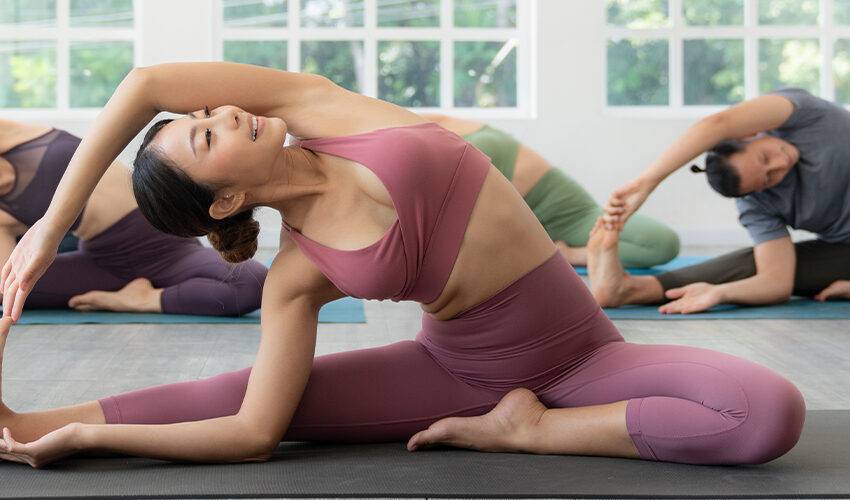
The environment matters more than most people realise. A proper yoga studio provides thermal conditions, spatial freedom, qualified instruction, and a structured approach to sequencing that is specifically designed to work through the body’s fascial chains in order. This is not something that can be replicated adequately with a mat in a bedroom.
Instructors who are trained in anatomy and fascia-aware teaching will sequence a class to open the superficial back line before working the deep front line, to address the spiral chains through rotational work, and to close with nervous system regulation that allows the tissue changes to consolidate. This kind of intelligent sequencing is what separates a therapeutic yoga practice from general exercise.
Yoga Edition offers classes specifically designed around tissue recovery and structural restoration, including Wall Rope Yoga and Yin modalities that are directly relevant to fascial health. The studio environments are purpose-built for the kind of sustained, warm, and progressively sequenced practice that fascia actually needs.
FAQ
Q. Can fascial problems cause nerve pain or tingling? A. Yes. Because fascia surrounds and channels nerve pathways, densified or adherent fascial tissue can compress or restrict nerves and produce tingling, numbness, or referred pain. This is sometimes mistaken for a disc or nerve root problem. Fascial release through yoga can reduce this compression over time, though persistent neurological symptoms should always be assessed by a medical professional first.
Q. How long does it take to see improvement in fascial stiffness through yoga? A. Most people notice a meaningful difference in their overall stiffness and range of motion within four to six weeks of consistent practice two to three times per week. Fascia remodels slowly because collagen turnover is a gradual biological process, but the fluid and ground substance changes that reduce immediate stiffness can happen within a few sessions.
Q. Is there a specific time of day that is better for fascial yoga work? A. Fascia is generally stiffer in the morning because fluid redistributes during sleep and the tissue cools overnight. Evening sessions, when the body has been warmed by a full day of movement, often allow for deeper fascial work. That said, morning yin or restorative classes with a proper warm-up are still highly effective and carry the benefit of setting tissue tone for the rest of the day.
Q. Does fascial health affect my skin and posture as well as my movement? A. It does. The superficial fascia layer sits just beneath the skin and is connected to deeper layers. When superficial fascia is dehydrated or adherent, it can affect skin texture, reduce lymphatic drainage, and contribute to postural collapse because the fascial system is a continuous tensional network. Improved fascial hydration and mobility through yoga practice has been associated with better posture, improved lymphatic flow, and changes in skin pliability over time.