Beginner Friendly Yoga Poses That Support Better Flexibility and Body Balance
Introduction
Yoga has become one of the most effective and accessible ways to improve flexibility, body balance, posture, and overall wellness. For beginners, yoga offers a gentle introduction to physical activity while also supporting mental relaxation and body awareness. Unlike high-impact workouts that may feel intimidating, yoga focuses on controlled movement, breathing, and gradual improvement.
Many people experience muscle stiffness, poor posture, and limited mobility due to long hours of sitting, stress, or lack of physical activity. Beginner-friendly yoga poses can help reduce tension, improve flexibility, and strengthen stabilizing muscles that support balance and coordination.
Yoga is not about achieving perfect poses or advanced flexibility immediately. It is about learning how to move the body safely and mindfully while building strength and mobility over time. Even simple yoga routines practiced consistently can create noticeable improvements in comfort, movement, and physical confidence.
For beginners, focusing on foundational yoga poses is one of the best ways to develop flexibility and balance safely while building long-term healthy habits.
Why Flexibility and Balance Matter
Flexibility and balance are essential for healthy movement and daily physical function.
Good flexibility helps:
- Improve range of motion
- Reduce muscle stiffness
- Support posture
- Lower injury risk
- Improve mobility
Balance is equally important because it helps the body remain stable during movement and physical activity.
Good balance supports:
- Better coordination
- Safer movement
- Reduced fall risk
- Improved posture
- Greater physical confidence
Yoga combines stretching, stability, and body awareness to improve both flexibility and balance at the same time.
Benefits of Beginner Yoga Practice
Yoga provides physical and mental benefits that support overall wellness.
Improved Flexibility
Regular stretching helps lengthen muscles and improve joint mobility.
Over time, yoga may help reduce tightness in areas such as:
- Hamstrings
- Hips
- Shoulders
- Back muscles
Improved flexibility often makes daily movement feel more comfortable.
Better Balance and Stability
Many yoga poses strengthen stabilizing muscles while improving body awareness.
Better balance helps improve:
- Coordination
- Posture
- Walking stability
- Athletic performance
Balance training becomes especially important as people age.
Increased Strength
Yoga uses body weight to strengthen muscles throughout the body.
Beginner poses often improve strength in:
- Core muscles
- Legs
- Back muscles
- Arms
- Glutes
Strength and flexibility work together to support healthy movement.
Reduced Stress and Tension
Controlled breathing and mindful movement help calm the nervous system.
Yoga may help reduce:
- Stress
- Anxiety
- Mental fatigue
- Muscle tension
Relaxation is an important part of long-term wellness.
Better Posture
Poor posture often develops from prolonged sitting and weak stabilizing muscles.
Yoga encourages spinal alignment and body awareness, which may help reduce:
- Neck tension
- Shoulder tightness
- Lower back discomfort
Tips for Beginners Starting Yoga
Starting slowly and focusing on proper form helps beginners practice safely and confidently.
Wear Comfortable Clothing
Choose clothing that allows free movement and flexibility.
Yoga is typically practiced barefoot to improve balance and stability.
Focus on Breathing
Breathing is an important part of yoga practice.
Steady breathing helps improve:
- Relaxation
- Focus
- Oxygen flow
- Body awareness
Avoid holding your breath during poses.
Avoid Comparing Progress
Every individual has different flexibility and balance abilities.
Yoga is about personal improvement rather than competition.
Move Slowly and Safely
Controlled movement reduces injury risk and improves body awareness.
Stretching should feel comfortable rather than painful.
Practice Consistently
Short and regular sessions are often more effective than occasional intense workouts.
Consistency helps improve flexibility and balance gradually over time.
Beginner Friendly Yoga Poses for Flexibility
Certain yoga poses are especially helpful for improving flexibility in beginners.
Child’s Pose
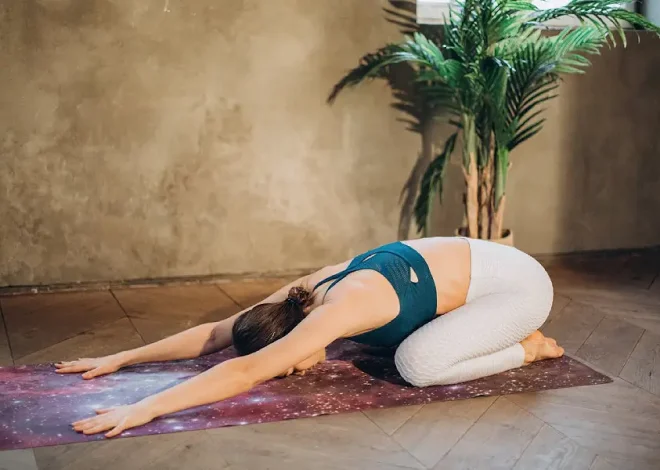
Child’s pose is a gentle resting posture that stretches the back, hips, and shoulders.
Benefits include:
- Relaxation
- Gentle spinal stretching
- Reduced tension
- Improved breathing
This pose is beginner-friendly and commonly used during recovery periods in yoga sessions.
Cat Cow Stretch
The cat cow sequence improves spinal flexibility and mobility.
Benefits include:
- Better posture
- Improved spinal movement
- Reduced stiffness
- Increased circulation
This movement is especially useful for individuals who sit for long periods.
Downward Facing Dog
Downward facing dog stretches multiple muscle groups simultaneously.
It helps improve flexibility in:
- Hamstrings
- Calves
- Shoulders
- Back muscles
This pose also strengthens the arms and core.
Seated Forward Fold
This pose stretches the hamstrings, lower back, and spine.
Benefits include:
- Improved flexibility
- Better posture
- Relaxation
- Reduced muscle tightness
Beginners should bend their knees slightly if flexibility is limited.
Cobra Pose
Cobra pose gently stretches the chest, shoulders, and abdominal area.
Benefits include:
- Improved spinal flexibility
- Better posture
- Reduced back stiffness
- Strengthened back muscles
This pose should be performed carefully without forcing the lower back.
Beginner Friendly Yoga Poses for Balance
Balance poses improve coordination, stability, and concentration.
Mountain Pose
Mountain pose teaches body alignment and grounding.
Benefits include:
- Improved posture
- Better body awareness
- Stronger balance foundation
- Core engagement
Although simple, this pose helps build awareness of proper alignment.
Tree Pose
Tree pose is one of the most popular beginner balance exercises.
Benefits include:
- Improved coordination
- Stronger leg muscles
- Better concentration
- Increased stability
Beginners can place one foot lower on the leg for better balance support.
Warrior One Pose
Warrior one strengthens the legs while improving balance and posture.
Benefits include:
- Increased lower body strength
- Improved stability
- Better posture
- Enhanced focus
This pose also stretches the hips and chest.
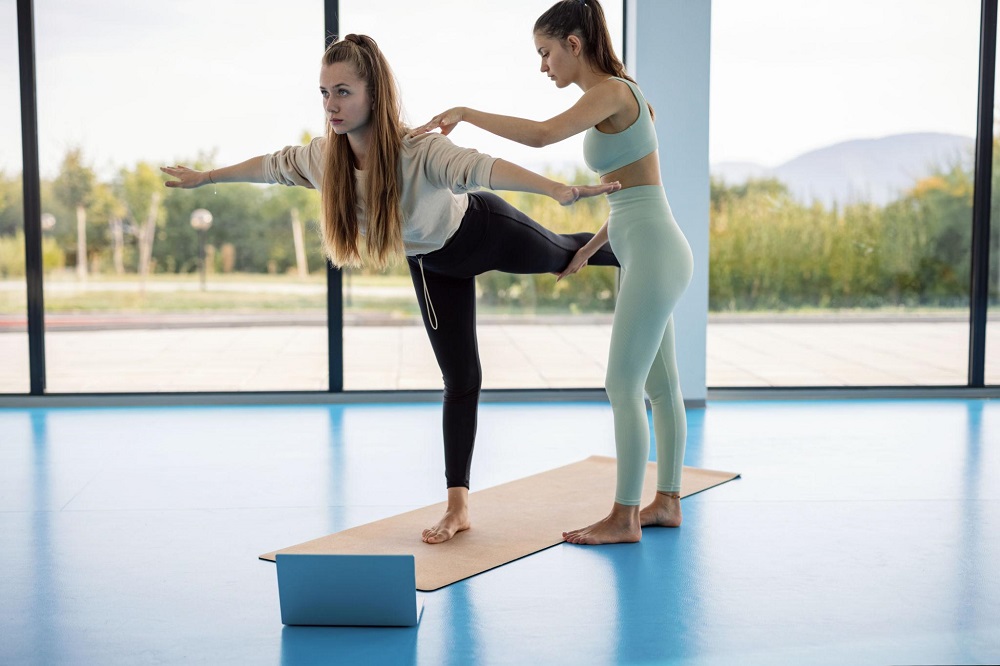
Warrior Two Pose
Warrior two helps improve endurance, stability, and body awareness.
Benefits include:
- Stronger legs
- Better balance
- Improved hip mobility
- Increased concentration
Controlled breathing helps maintain stability during this pose.
Chair Pose
Chair pose strengthens the legs and core while challenging balance.
Benefits include:
- Increased leg strength
- Better posture
- Core stability
- Improved endurance
Beginners should avoid leaning too far forward during this pose.
How Yoga Improves Body Awareness
Body awareness refers to understanding how the body moves and responds during activity.
Yoga encourages awareness by focusing on:
- Breathing
- Alignment
- Muscle engagement
- Controlled movement
Improved body awareness may help reduce injuries and improve movement quality in daily life.
The Importance of Breathing During Yoga
Breathing techniques support both physical and mental benefits during yoga practice.
Controlled breathing helps:
- Improve oxygen flow
- Reduce stress
- Increase focus
- Support relaxation
- Maintain movement control
Deep breathing also encourages mindfulness and emotional calmness.
Common Beginner Mistakes
Many beginners make mistakes that may reduce comfort or increase injury risk.
Forcing Flexibility
Stretching too aggressively may strain muscles or joints.
Flexibility improves gradually with regular practice.
Ignoring Alignment
Proper posture and alignment are important for safety and effectiveness.
Practicing slowly helps improve form and stability.
Holding Breath
Breathing should remain smooth and steady throughout yoga practice.
Holding breath may increase tension and discomfort.
Comparing With Others
Flexibility and balance develop differently for every person.
Yoga should focus on personal progress rather than comparison.
Building a Simple Beginner Yoga Routine
Beginners can start with short sessions that combine stretching and balance poses.
A simple beginner routine may include:
- Child’s pose
- Cat cow stretch
- Downward facing dog
- Mountain pose
- Tree pose
- Seated forward fold
Even 15 to 20 minutes of daily practice can support noticeable improvement over time.
Yoga and Mental Wellness
Yoga benefits mental health as much as physical fitness.
Regular yoga practice may help support:
- Reduced stress
- Improved focus
- Better emotional balance
- Increased relaxation
- Reduced anxiety
Mindful movement and breathing create a calming effect on the nervous system.
Yoga for Different Age Groups
Yoga can be adapted for nearly all age groups and fitness levels.
Children and Teenagers
Young individuals may benefit from yoga through improved coordination, flexibility, and concentration.
Adults
Adults often use yoga for stress management, mobility, and physical wellness.
Older Adults
Gentle yoga poses help older adults improve balance, flexibility, and movement confidence.
Chair yoga and modified poses may provide additional support when needed.
Technology and Beginner Yoga
Technology has made yoga more accessible for beginners.
Helpful resources include:
- Online yoga classes
- Mobile yoga apps
- Video tutorials
- Virtual instructors
These tools allow beginners to practice from home at their own pace.
Long-Term Benefits of Yoga Practice
Consistent yoga practice may support:
- Better flexibility
- Improved posture
- Stronger muscles
- Increased stability
- Reduced stress
- Healthier movement patterns
Small improvements practiced consistently often create meaningful long-term results.
Conclusion
Beginner-friendly yoga poses provide a safe and effective way to improve flexibility, body balance, posture, and overall wellness. Yoga encourages controlled movement, mindful breathing, and gradual progress that supports both physical and mental health.
By practicing simple poses consistently, beginners can increase mobility, strengthen stabilizing muscles, improve coordination, and reduce physical tension. Yoga also supports emotional wellness by promoting relaxation and stress management.
The key to successful yoga practice is patience and consistency rather than perfection. With regular practice and mindful movement, yoga can become a valuable long-term habit that supports healthier movement, better balance, and improved quality of life.
Frequently Asked Questions
1. Is yoga safe for beginners with limited flexibility?
Yes, yoga can be adapted for all flexibility levels, and many beginner poses are designed specifically for people with limited mobility.
2. How often should beginners practice yoga?
Beginners often benefit from practicing yoga two to five times per week depending on their schedule and comfort level.
3. Can yoga improve balance over time?
Yes, regular yoga practice strengthens stabilizing muscles and improves body awareness, which helps improve balance.
4. Do beginners need special equipment for yoga?
Most beginners only need comfortable clothing and a yoga mat to start practicing.
5. How long does it take to improve flexibility with yoga?
Flexibility improvements vary by individual, but many people notice gradual progress within several weeks of consistent practice.
6. Can yoga help reduce muscle stiffness?
Yes, stretching and controlled movement help improve circulation and reduce muscle tightness.
7. What is the best yoga style for beginners?
Gentle styles such as Hatha yoga and beginner yoga classes are often ideal for individuals starting yoga practice for the first time.